I am a musician, musicologist and scholar of English and American studies (M.A.; studies in Regensburg, London and Berlin). Since 2023 I have taught English and music in schools: first at the Neue Deutsche Schule Alexandria in Egypt in 2023, then at the Jean Krämer Schule in Berlin. I have held the Second State Examination qualification since 2024. Before that, I ran my own music school for sixteen years and taught there too.
Peter Roth-Westdickenberg
Musician, musicologist and teacher. My work connects music, philosophy, research and education.
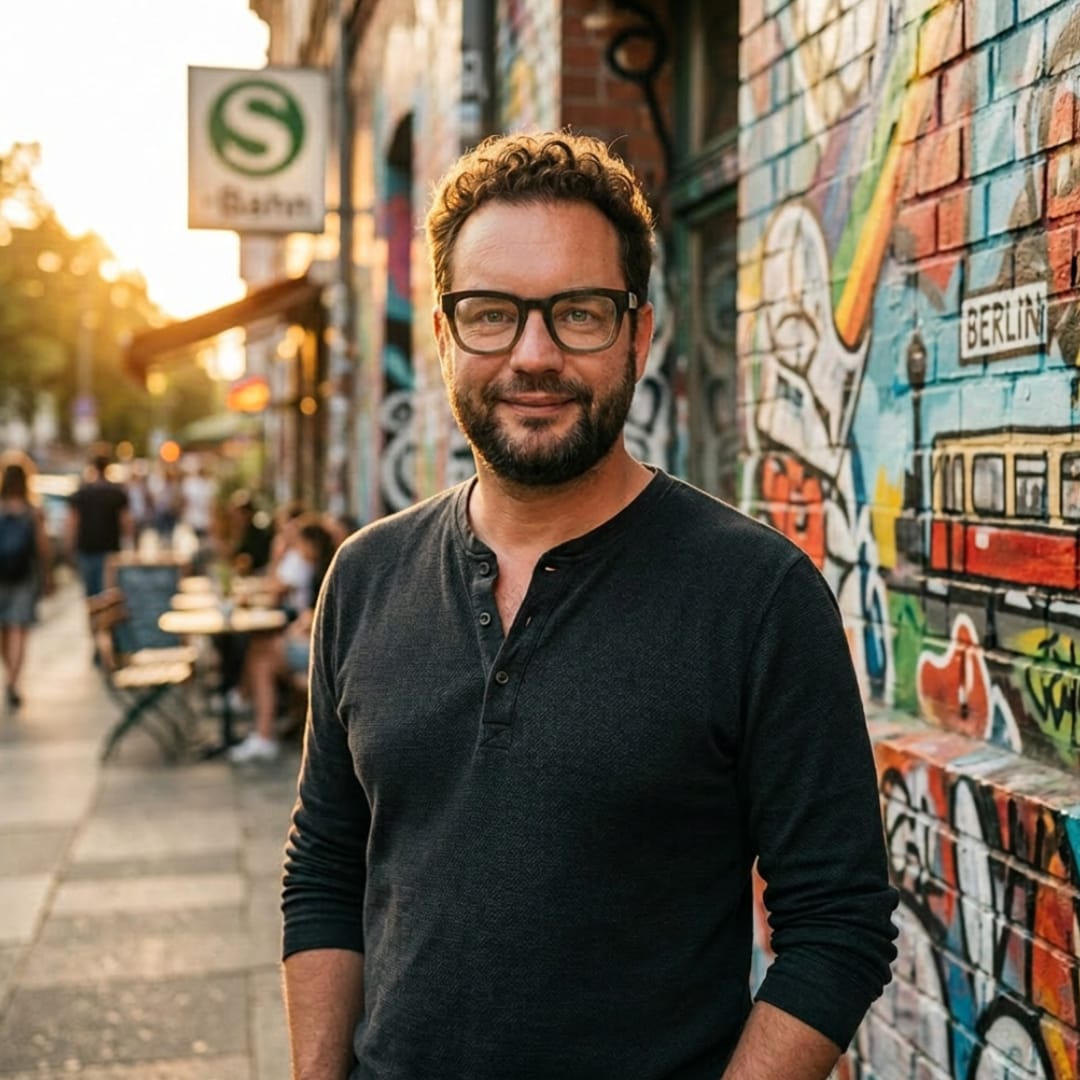
My path to the Zwischenraum
When someone asks what I actually do, I sometimes say: I like listening to bread crackle after baking.
This does not evade the question. It answers it.
For the crackling arises neither in the bread nor in the listener. It arises between them. In the moment when something settles. When heat and time have found a form that now breathes. Anyone looking only at the result misses this moment.
I try not to miss it.
This is the heart of my philosophy of the Zwischenraum: the Zwischenraum is not the distance between two things. It is the condition under which encounter becomes possible at all. Entering resonance without co-opting the other. It sounds simple. It is the most difficult stance I know, and it sustains everything I do.
I am a musician, musicologist and scholar of English and American studies (M.A.; studies in Regensburg, London and Berlin). Since 2023 I have taught English and music in schools: first at the Neue Deutsche Schule Alexandria in Egypt in 2023, then at the Jean Krämer Schule in Berlin. I have held the Second State Examination qualification since 2024. Before that, I ran my own music school for sixteen years and taught there too.
What has emerged from this thinking can be found here.
Philosophy
Die Philosophie des Zwischenraums is neither a textbook nor a theory. It is a philosophy born of pain and the decision not to waste it. It asks what remains when certainties break. What truth means when it is an event rather than a possession. How relationship remains possible without one person co-opting the other. Its answers do not come from above. They come from the lived body, encounter, the between — where life actually happens.
Music
Pete & The Jam was my philosophy's musically active form. Entering resonance with a composition, with other musicians; responding to their recordings; changing one's own contribution where necessary without betraying oneself. The same Zwischenraum, only in sound. Alongside it stand Mathilda and other projects emerging from the same stance: entering relationship without dissolving oneself.
Research
My musicological texts arise from an encounter that changed me fundamentally. Egypt, Alexandria, was not fieldwork. It was the bodily experience of strangeness: music whose truth my body did not know because it had never learnt to listen that way. This shook my Eurocentric worldview — did not reverse it, but called it into question. What happens when the other appears as independent and equal rather than exoticised? This is a musicological question. And the same question occupies me in the classroom.
Education
In lessons, what matters to me is not that pupils can count twelve bars in the blues. I want their faces to contort with the mood when the guitar howls. Making perception visible, rather than teaching and testing what is easily scalable. Anyone learning truly to hear music practises something more fundamental: entering resonance with something unfamiliar. Developing a stance before judging. This is the heart of it — the foundation of what we so urgently need socially and democratically, rather than one educational aim among others.
Listen. Read. And if something crackles, I would love to hear about it.
Path of development
Path of development
The biography behind this website is not a straight line. It moves from music as home towards music, research, education and writing as different spaces of expression.
Music as home
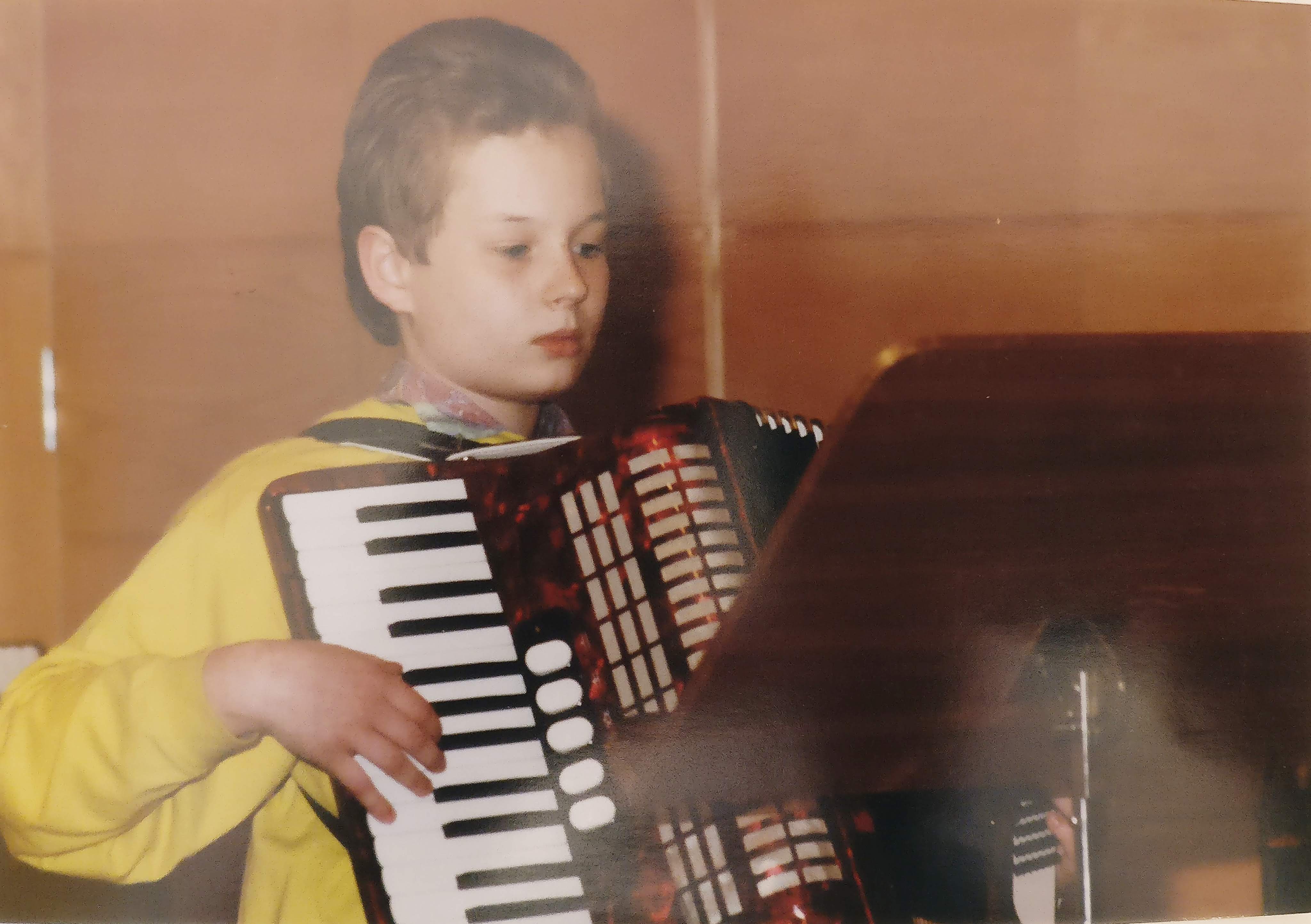
Recorder begins at five, piano at six. Accordion, clarinet, electric bass, drums, violin and church organ follow. Early on, music becomes a place where expression and orientation are possible.
Music as participation
Asked why I play so many instruments, I once answered: ‘An ensemble is always missing someone — that way I can always play with somebody.’ Looking back, this sentence describes more than instrumental lessons. It describes music as relationship.
Studies and detours
Studying musicology, English and American studies in Regensburg, London and Berlin did not follow a finished life plan. Some decisions came from uncertainty, others from good fortune. Precisely this later made teaching, research and the connection of music, language and education possible.
Musikschule Westdickenberg
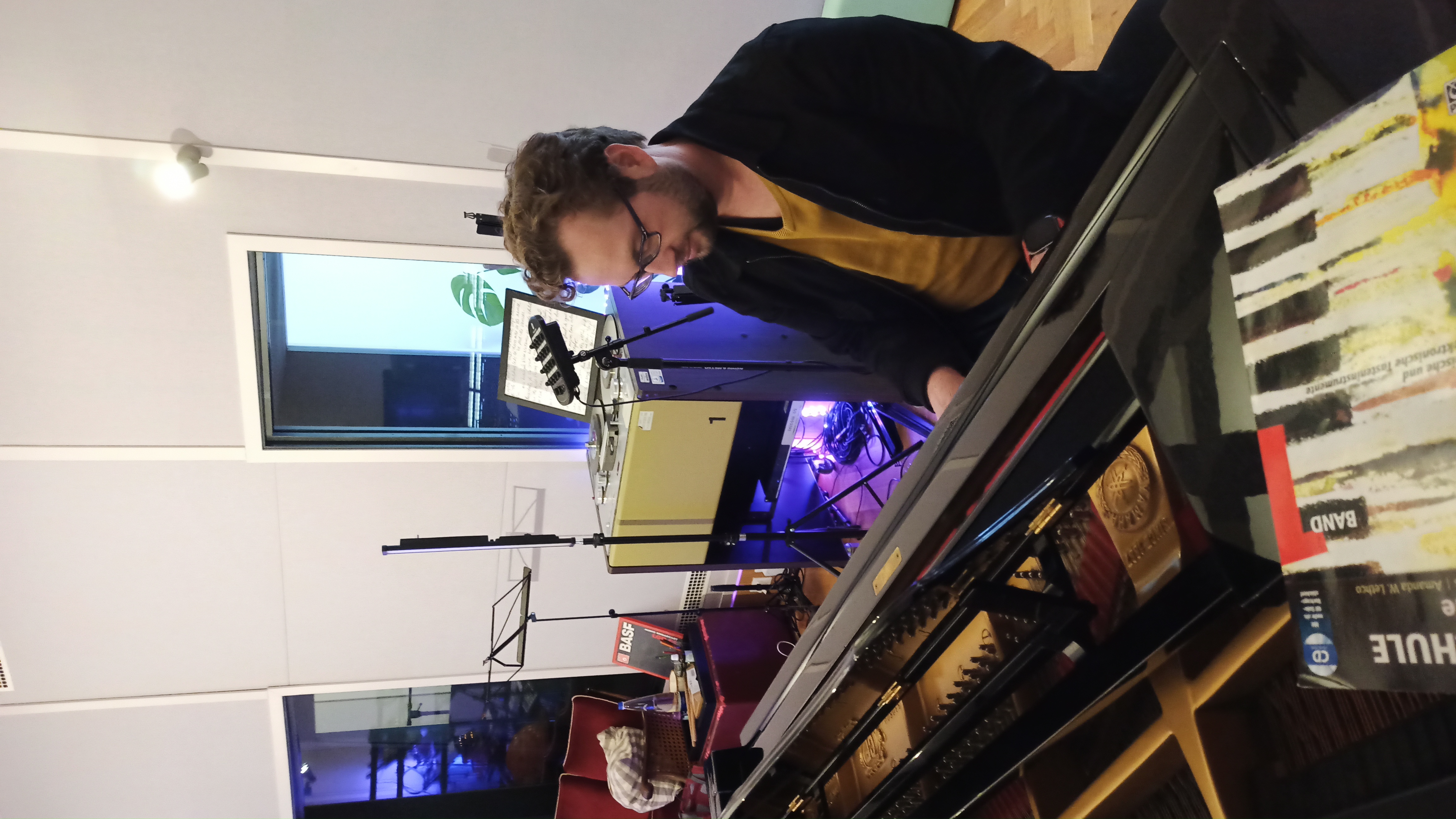
Initial piano lessons among people I knew grew into a music school. For sixteen years, teaching, management, arranging, composition and music production became daily practice with children, adolescents and adults.
Alexandria
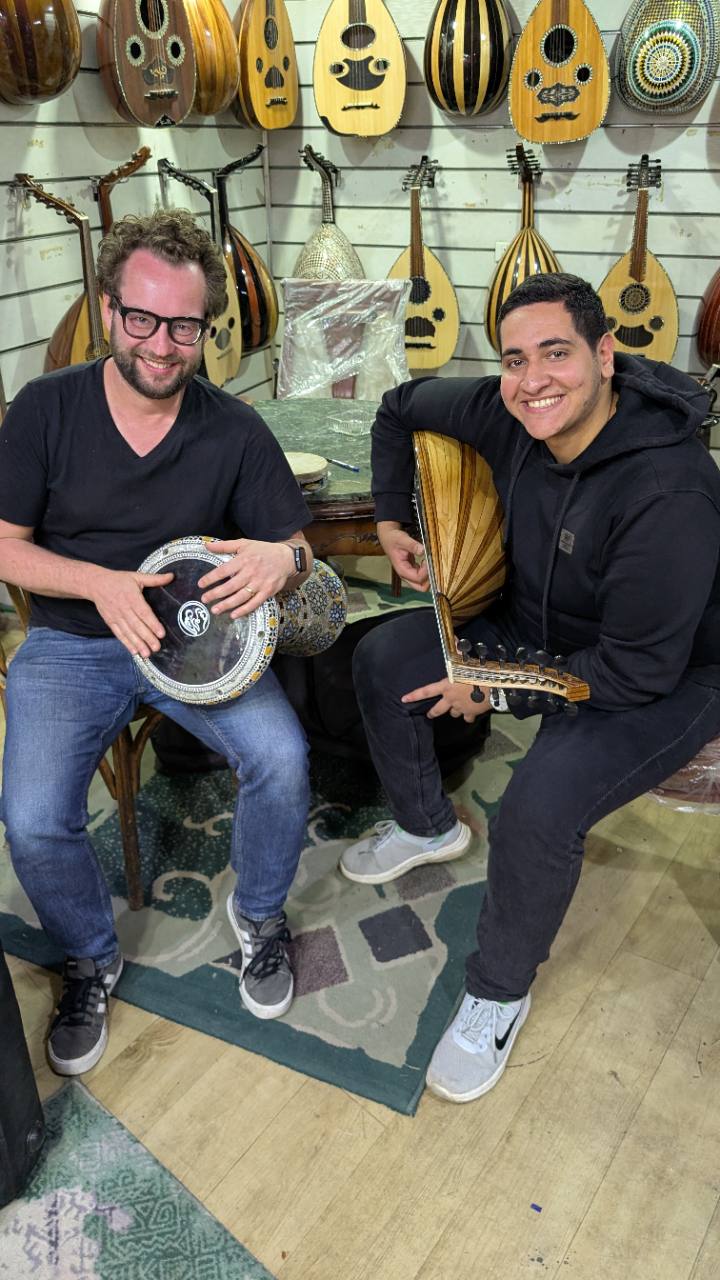
In 2023 Alexandria becomes a turning point. At the Neue Deutsche Schule Alexandria I encounter a musical culture whose truth my body did not know. There, too, I am seen first as a person rather than a musician or music-school director.
Reorientation
The crisis of 2025 changes how I see my identity. Music remains essential, but it is not the only centre. Writing, research, philosophy, painting, website development and curriculum design become further spaces of the same search.
What sustains my work
What sustains my work
My work does not emerge from a single field. It has grown over many years between music, school, research, stage, studio and teaching.
Education and school
Abitur at Augustinus-Gymnasium Weiden; musicology, English and American studies in Regensburg, London and Berlin; teacher training and the Second State Examination.
Music education
Sixteen years of Musikschule Westdickenberg: management, teaching, piano, keyboard, arranging, composition, music production and work with children, adolescents and adults.
Musical roots
Classical music, Upper Palatinate folk music, church music, jazz, gospel, pop, experimental music and later Arab music form a school of listening rather than a palette of styles.
International experience
The Neue Deutsche Schule Alexandria and encounter with Arab musical culture became the starting point for The Learning Ear and the question of musical strangeness.
Curriculum
As a music teacher in Berlin, I develop a modular curriculum connecting perception, action, reflection and research.
Research
Resonance-oriented education of perception, a research manual, questionnaire, listening journal sheet, coding guide and analytical framework now belong to the same movement.
What has emerged from it
Philosophy
Texts on perception, resonance and the Zwischenraum.
Think furtherMusic
Albums, band work, film music and sampling as sounding practice.
ListeningResearch
Strangeness, standards and teaching as scholarly questions.
Pursue questionsEducation
Modules, learning movements and teaching materials.
To the modules